
The Sell
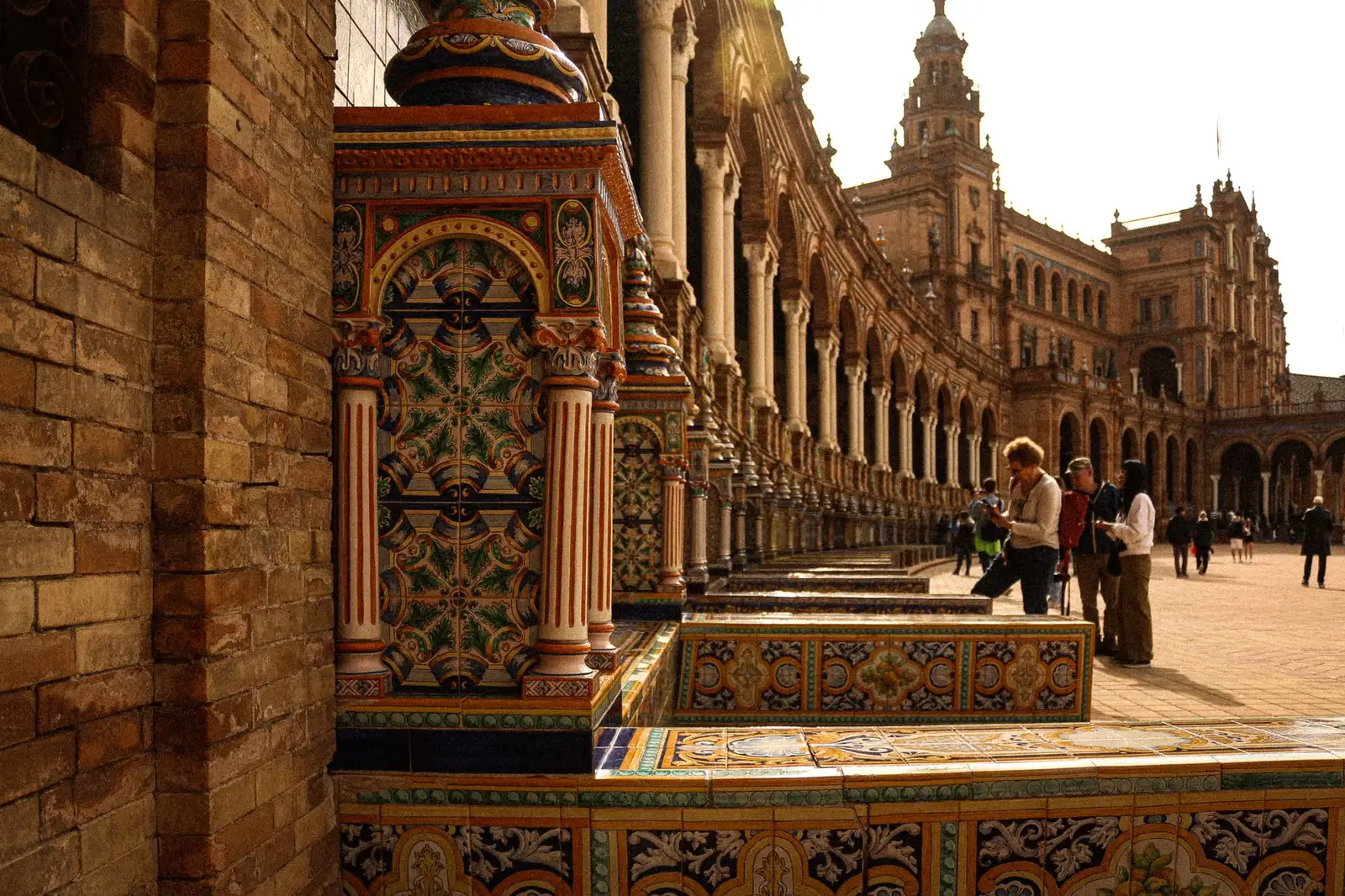
The brochure copy writes itself. Ancient city, sensual heat, the smell of orange blossom drifting through narrow streets, a woman in a red dress who appears, as if on cue, at precisely the moment your tour group rounds a corner in the Triana district. The flamenco is about to begin. You paid €180 for this.
Seville has been sold so many times, in so many registers, that the selling has become indistinguishable from the place itself. That's the trick. The luxury end of Andalusian tourism doesn't just market a destination. It markets the feeling of having found what exists beyond the tourist circuit, and charges accordingly for the theater of that discovery.
What €350 a Night Buys You
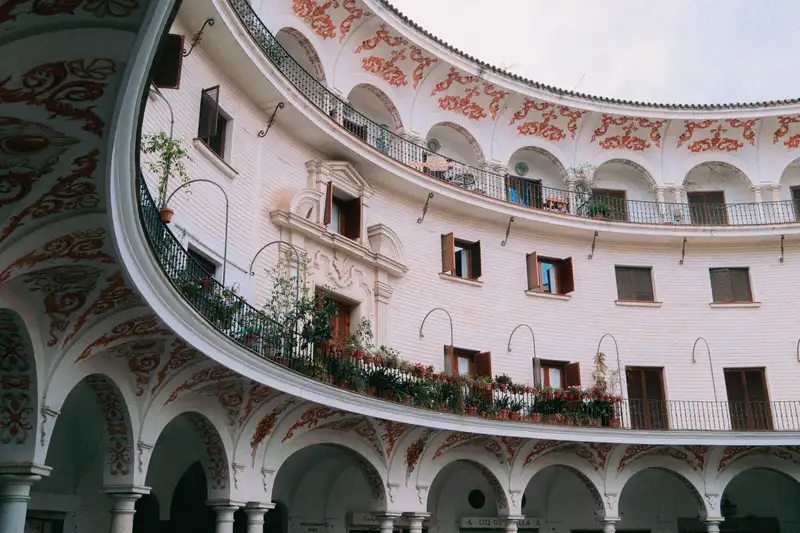
The Hotel Alfonso XIII on Calle San Fernando opened in 1929 and is, by any fair measure, a beautiful building. Mudejar archways, hand-painted tiles, a central courtyard where the light does something extraordinary in the late afternoon. I'm not here to argue that beautiful hotels shouldn't exist.
But a standard room at the Alfonso XIII runs somewhere between €350 and €600 a night depending on season, and what that price point purchases, beyond the architecture, is a particular relationship to the city outside its walls. A managed one. The concierge recommends Eslava on Calle Eslava for tapas, and Eslava is good, popular with locals, so no complaint there, but the recommendations arrive pre-vetted, pre-insured against discomfort, stripped of the friction that makes a city legible.
Luxury tourism in Seville isn't selling you the city. It's selling you a simulation of the city with the difficult parts removed. The loud family argument spilling out of a third-floor window on Calle Feria. The bar at 11am where three men are drinking brandy without apology. The flamenco that happens in Bar Carbonería on Calle Levíes on a Tuesday without a ticket system, without a minimum spend, where someone might be brilliant and someone else might be learning and the whole thing is under no obligation to be picturesque.
That version of Seville costs almost nothing. The luxury version costs a great deal and delivers considerably less of the place itself.
The Paella Tour Problem
Consider a specific case, because specifics are where the argument gets honest.
Mass-market culinary tours in Seville, and there are dozens operating out of the Santa Cruz neighborhood, most charging between €75 and €120 per person, have built a modest industry around the idea of "authentic Andalusian cuisine." Paella features prominently in the marketing, despite the fact that paella is a Valencian dish and its presence on Sevillano menus is largely a concession to tourist expectation. Any Sevillano will tell you this, sometimes with patience, sometimes not.
What these tours deliver is a circuit of four or five restaurants in a roughly two-kilometer radius of the cathedral, each of which has a pre-existing commercial arrangement with the tour operator. The stops are timed. The portions are pre-agreed. The servers know the script. At one stop, there's often a brief explanation of sherry production that lasts approximately four minutes and involves holding a glass up to the light.
None of this is secret. The operators don't claim otherwise, exactly. But the marketing language, "immersive," "local," "off-the-beaten-path", performs a kind of deception that the fine print never quite corrects. The Tripadvisor reviews glow. Visitors leave feeling they've touched something untouched. They've been moved efficiently through a set.
The ethical problem isn't just the false advertising. It's the structural effect. These tour circuits funnel significant foot traffic and spending into a small number of pre-selected venues, bypassing the neighborhood economy. The bar on Calle Alfalfa that doesn't have an English menu and doesn't respond to tour operator emails doesn't get the business. The arrangement rewards compliance with the tourist apparatus and punishes indifference to it.
Flamenco as Product
Flamenco is the sharpest example of this dynamic, partly because it's the art form most aggressively packaged for export.
The tablaos, purpose-built flamenco venues with dinner service and tiered pricing, have existed in Seville for decades. Casa de la Memoria on Calle Cuna charges around €22 for a performance without dinner and is, relative to the genre's commercial end, reasonably well-regarded. The performers are often skilled. The space is intimate. I'm not dismissing it.
But the €80–€150 "premium flamenco experience" packages sold through luxury hotels and boutique travel agencies occupy a different register entirely. These promise backstage access, conversations with artists, a sense of privileged proximity to an ordinarily closed world. The reality, reported consistently by people who've paid for it, is a brief post-show handshake in a corridor and a photograph. The artists are compensated for this, presumably, though the split between what the traveler pays and what the performer receives is not information that gets volunteered.
Labor conditions in the performance end of the flamenco industry are not uniformly good. This is documented, if not loudly. Many performers work on contracts that pay per show without benefits, without sick pay, without the kind of stability that would allow them to turn down a booking even when they're unwell or the material feels compromised. The luxury traveler standing in that corridor, photograph in hand, is not responsible for this system. But the premium price they paid didn't flow toward the people who made the thing worth paying for.
That gap, between what the experience costs and what reaches the people who create it, is where the ethical blind spot lives. Luxury tourism is structurally inclined to widen it, because the margin on "exclusive access" is large and the people providing the access are rarely the people who built the thing being accessed.
The Street Life That Doesn't Need You
Here's what I mean by friction being useful.
On a weekday morning in February 2023, I walked from the Alameda de Hércules south toward the Mercado de la Encarnación. The Alameda at that hour is not scenic in any curated sense. There are dog walkers, a couple of older men on benches, a café called La Cantina where the coffee is fine and the chairs are plastic and no one is performing for anyone. The orange trees along the central promenade were fruiting, which in Seville they do from November through February, and the smell was extraordinary, sweet and slightly fermented where fruit had dropped and been walked on.
At the Mercado de la Encarnación, the one under the Metropol Parasol structure, which opened in 2011 and which locals have mixed feelings about, architecturally, the fish stalls were doing business. Not tourist business. Commerce between people who knew each other, conducted in rapid Andalusian Spanish that drops half its consonants and runs words together in ways that leave even fluent Castilian speakers momentarily lost.
None of this was organized for my benefit. None of it was legible as an "experience" in the tourism-product sense. It was just the city, being itself, at a speed and temperature it chose.
This is what the luxury apparatus is, at its core, afraid of. Not because it's unpleasant, it isn't, but because it can't be packaged without being destroyed. The moment you put a guide in front of it and a price tag beside it, the thing you were selling has already left.
The Authenticity Paradox
The word "authentic" appears in the marketing copy of virtually every luxury tour operator working in Seville. It's used to mean something like "not fake" or "genuinely local" or "the genuine thing, not the tourist version." The irony is so complete it's almost structural: the search for what's genuine, conducted through the mechanisms of high-end tourism, produces the very inauthenticity it claims to remedy.
This isn't a new observation. Dean MacCannell wrote about the "staged authenticity" of tourism in 1973, and his framework holds up reasonably well fifty years later. What's changed is the price. The staging has become more sophisticated, the vocabulary more knowing, the willingness to use the word "curated" without embarrassment more widespread. A €2,000 multi-day "cultural immersion" itinerary through the Albaicín in Granada or the Barrio Santa Cruz in Seville is not more truthful than a €0 walk through the same streets. It is more expensive, more managed, and more insulated from the possibility of encounter that isn't scripted.
The affluent traveler who buys these packages isn't stupid. They often know, somewhere, that what they're getting is a performance. But the performance is good enough, and the discomfort of the alternative, wandering without a net, being lost, not understanding, sitting in a bar where you're visibly out of place, feels substantial enough that the trade-off seems reasonable.
What they're buying, ultimately, is comfort dressed as adventure. The feeling of having gone somewhere, without the risk of actually arriving.
Who Benefits
The economics of luxury tourism in Seville are not evenly distributed, and this is worth being direct about.
The major hotel groups operating in the city, the Alfonso XIII is Marriott-managed; there are Meliá properties, a Four Seasons that opened on the Paseo de Cristóbal Colón in 2020, are not locally owned enterprises in any meaningful sense. The revenue they generate does not primarily circulate within the Sevillano economy. Some of it does, through employment and local supplier contracts. But the profit structure of an international hotel chain is not designed to maximize local economic benefit.
The tour operators are a more mixed picture. Some are small, local operations run by people who care about the place and make reasonable livings from it. Others are subsidiaries of larger travel conglomerates dressed in the visual language of independent boutique operations, the hand-drawn logo, the founder's story on the About page, the careful use of "family-run" in the copy.
The workers at the bottom of both structures, the housekeepers, the kitchen staff, the performers doing four shows a week, the flamenco guitarist who's been playing the same forty minutes of material for six years because that's what the contract requires, are not the people the luxury premium rewards. The premium rewards whoever controls access. That's rarely the person who makes it worth having.
A Different Kind of Spending
None of this is an argument for not going to Seville. Seville is extraordinary and the people who live there are not well served by the idea that tourism itself is the problem. Tourism brings money into a city that needs it. The question is always how that money moves once it arrives.
Spending €12 on a long lunch at La Azotea on Calle Jesús del Gran Poder, which is small, good, and doesn't appear in every luxury itinerary, does something different than spending €180 on a guided "tapas immersion" that visits four venues in Santa Cruz. The first puts money into a specific local business. The second puts money into a distribution system where the specific local businesses are adjuncts to a larger commercial arrangement.
It's a practical argument. If you want your spending to reach the people who built the thing you came to see, the path there is usually shorter and cheaper than the luxury apparatus suggests. The bar where the flamenco is genuine is the one without a booking system. The tapas that taste like Seville taste that way because no one engineered them to taste that way.
The city is there. It's been there a long time. It doesn't need to be forced open.
The Longer View
Seville's old city center has seen significant displacement pressure over the past decade. The short-term rental market, Airbnb listings in the Casco Antiguo increased by roughly 300% between 2015 and 2019, before pandemic disruption and subsequent partial recovery, has pushed residential rents upward and reduced the stock of long-term housing available to people who actually live there. This is not unique to Seville; it's a pattern visible in Lisbon, in Porto, in the historic cores of a dozen European cities.
Luxury tourism accelerates this pressure. The high-end traveler who pays €500 a night for a boutique hotel in Santa Cruz is not personally responsible for the family that can no longer afford to rent on Calle Mateos Gago. But the infrastructure built to serve that traveler, the hotels, the restaurants with English menus and international wine lists, the tour circuits that treat the neighborhood as scenery, reshapes the neighborhood around its own needs. The people who give the place its character are gradually priced out of the place.
What remains is the set. Beautiful, functional, expertly lit. And increasingly empty of the thing that made it worth visiting.
For more on this, see experiential Madrid vacation.
That's the long-term cost of the luxury tourism model in Seville, and it's a cost the brochure doesn't mention.

Comments (0)
No comments yet. Be the first!