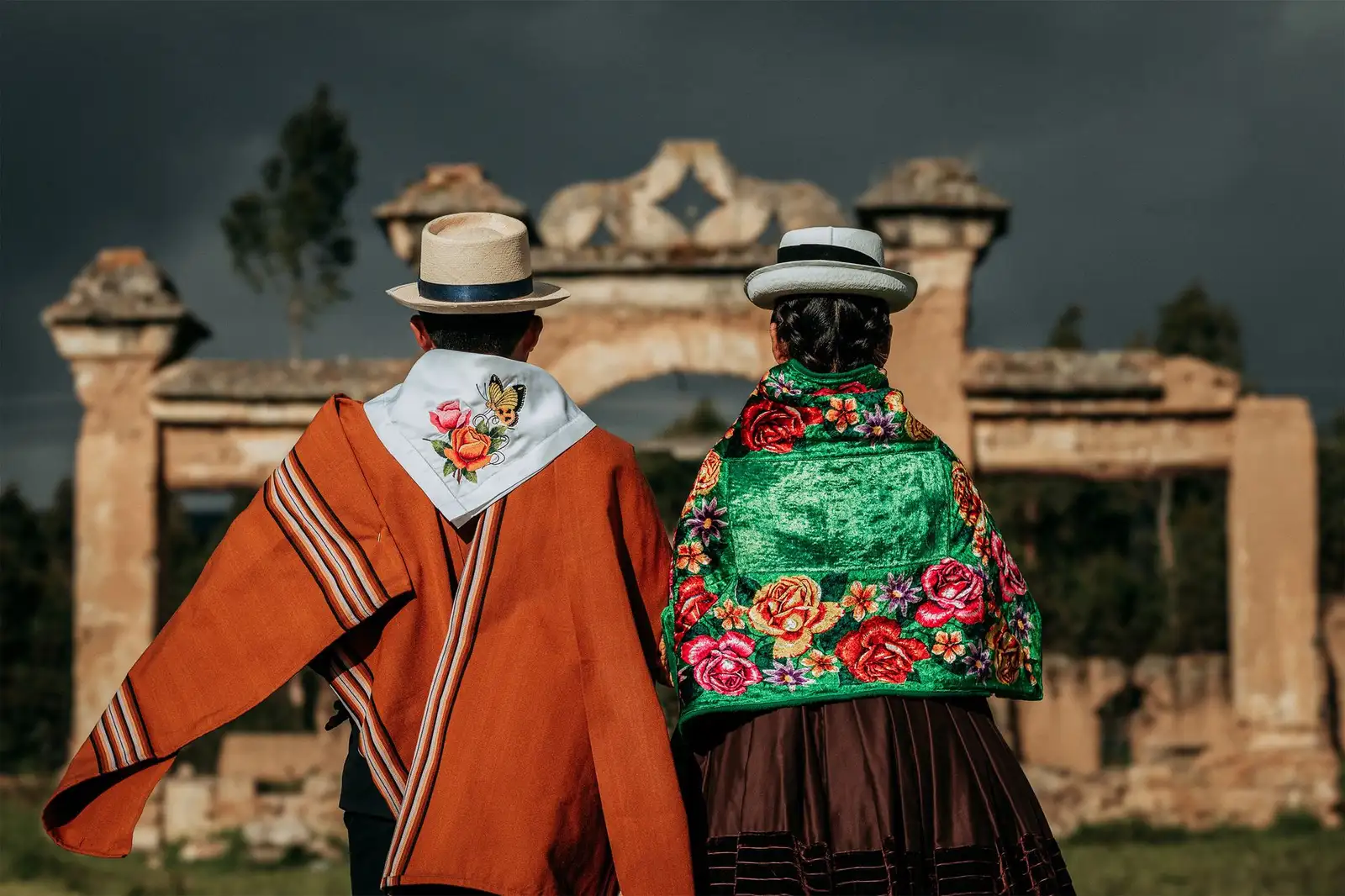

Here's something that happens every November, reliable as clockwork. Airlines send emails with subject lines like "Discover America's Ancient Lands." Tour operators post Instagram carousels of red rock formations and ceremonial pottery. Hotel chains hang dreamcatchers in their lobbies. And somewhere in the fine print, someone uses the phrase "celebrate Native American Heritage Month."
None of it has much to do with Native American people.
That gap, between the marketing performance and the actual communities, is worth examining. Not to score points, but because the travel industry's relationship with Indigenous heritage in the United States is one of the clearest examples of how tourism can extract cultural value while returning almost nothing to the source.
What Heritage Month Actually Is
Native American Heritage Month has been formally recognized in November since 1990, when President George H.W. Bush signed a joint congressional resolution. (There had been earlier iterations, a single day of recognition dating back to 1916, pushed by Dr. Arthur C. Parker, a Seneca Indian who led the Society of American Indians.) The National Archives maintains extensive resources on the history and documentation behind Native American Heritage Month, including primary records that most casual observers have never seen.
The month was meant to create space for recognition, education, and, critically, for Native American communities themselves to lead the narrative about their histories and present realities.
The travel industry had other ideas.
The Aestheticization Problem
Walk into almost any "Southwestern-inspired" hotel in Sedona, Santa Fe, or Scottsdale. You'll find design elements lifted from Navajo, Hopi, and Pueblo artistic traditions: geometric patterns on throw pillows, pottery reproductions on shelves, "kiva-style" fireplaces. The visual language of living cultures, reproduced as décor.
This isn't ancient history. It's happening now, in properties that charge $400 a night and describe themselves as offering "an immersive cultural experience."
What they're actually offering is aesthetics without accountability. The Navajo Nation is a political entity with a government, economic pressures, and people who are the actual inheritors of those visual traditions. They don't get a cut of the hotel rate. They don't get credited in the design notes. They often don't get asked.
The Indian Arts and Crafts Act of 1990 makes it illegal to misrepresent non-Native made goods as Native American, but it covers products, not atmospheres. A hotel can't legally sell you a fake Navajo rug labeled as authentic. It can absolutely build its entire aesthetic identity around Navajo visual culture without any relationship to the Navajo Nation whatsoever.
That loophole is enormous. And the travel industry has been driving through it for decades.
"Cultural Tourism" and What It Usually Means
The phrase "cultural tourism" gets used often. It almost always means tourists consuming a culture, rarely the other way around.
When a tour company offers you a "Native American cultural experience," ask who designed it. Ask who's paid. Ask whether the community in question had any role in deciding what gets shown, what stays private, what interpretation gets offered.
Some offerings are community-led. Most treat Indigenous cultural heritage as a resource to be extracted, packaged, and sold to people who want to feel like they've had an encounter with authenticity.
The Center for Responsible Travel has documented this pattern extensively, noting that tourism revenue from Indigenous cultural sites and cultural offerings frequently fails to reach the communities most directly connected to those sites. The money flows to operators, to platforms, to intermediaries. The community gets visibility, perhaps. A mention in a brochure.
Visibility isn't revenue. And it certainly isn't respect.
The Performative November Problem
Heritage Month specifically brings out a particular flavor of bad faith from the travel industry: the commemorative content piece.
You've seen them. "5 Sacred Native American Sites to Visit This November." "Honoring Indigenous Heritage Through Travel." The framing is always reverential, always respectful-sounding. And almost always, the practical effect is to drive traffic to places that are already overcrowded, already struggling with the tension between accessibility and preservation, already dealing with visitors who don't understand what they're looking at.
Monument Valley is probably the most photographed example. The Navajo Tribal Park exists because the Navajo Nation created it and manages it: that matters, and the park fees do support tribal operations. But the surrounding ecosystem of tour operators, photography workshops, and "adventure travel" companies built around Monument Valley is largely not Navajo-owned or operated. Someone is making money from those images. It's usually not who you think.
The November content surge doesn't ask any of these questions. It celebrates. Vaguely. With beautiful photography.
What "Honoring" Actually Requires
Here's the part that makes travel marketers uncomfortable: actual respect for Native American heritage requires more than appreciation. It requires restraint.
Some places are not meant for tourists. Some ceremonies are not meant to be observed. Some knowledge is not meant to be transmitted to strangers who read about it in a travel magazine.
The Puebloan communities of New Mexico have been navigating this for a long time. Many pueblo communities allow visitors during certain feast days and public ceremonies while maintaining strict boundaries around other spaces and practices. Those boundaries exist for reasons that don't need to be explained to outsiders: and the fact that tourists sometimes push against them, sometimes literally, is a failure of the entire education apparatus that surrounds heritage tourism.
A travel industry that actually respected Native American heritage would spend Heritage Month explaining what not to do. What not to photograph. Where not to go. Which "experiences" to avoid because they weren't designed with community input.
That's not a message that drives bookings. So it doesn't get sent.
The Land Acknowledgment Trap
Land acknowledgments have crept into the travel industry over the last several years. Hotels, tour operators, and travel companies now sometimes include a sentence or paragraph noting that their business operates on the ancestral lands of a particular Indigenous nation.
On its own, that's not nothing. Naming is a form of recognition. But watch how quickly it becomes a substitute for anything more substantial.
A hotel can acknowledge that it sits on Lenape land in its welcome packet and then spend zero dollars with Lenape-owned businesses, employ zero Lenape staff, and have zero ongoing relationship with the Lenape Nation of Pennsylvania. The acknowledgment becomes a kind of moral offset; we said the words, so we're covered.
It's the same logic as the carbon offset, and it deserves the same skepticism.
Land acknowledgments that aren't backed by actual relationships, actual revenue-sharing, or actual consultation with living communities are closer to marketing than to ethics. The travel industry has been very good at adopting the language of accountability without the practice of it.
What a Different Model Looks Like
I've spent years watching the gap between how operators talk about cultural immersion and what they actually deliver. Most "cultural" travel products are designed around the traveler's comfort and curiosity, not around what a community wants to share or how it wants to be represented.
Some operators have built their entire model around community partnership: where local families are hosts rather than performers, where the itinerary reflects what the community chose to offer rather than what a marketing team decided would sell. The difference is usually visible the moment you arrive: in those programs, the people you meet aren't in costume. They're people, in their actual lives, who chose to invite you in.
That's a different thing entirely from a "cultural experience" designed for Instagram.
The question worth asking any operator: who decided what gets included in this itinerary? If the answer is a travel company's product development team, that's one thing. If the answer involves ongoing consultation with the community itself: that's something else.
The Specific Harm of November Amplification
Heritage Month isn't neutral. When the travel industry amplifies interest in Native American sites and "experiences" for a month, it creates a demand spike. That spike hits communities and places that are often already managing difficult relationships with visitor pressure.
Chaco Culture National Historical Park in New Mexico, a UNESCO World Heritage Site, has been dealing for years with the tension between its extraordinary archaeological significance and the impacts of increased visitation. The Chacoan system represents one of the most complex pre-Columbian societies in North America, with deep connections to contemporary Pueblo peoples who consider it a sacred ancestral site. More traffic doesn't improve that relationship. It strains it.
Heritage Month content that drives people toward Chaco without explaining the significance of careful, respectful visitation (without mentioning the ongoing debates about energy development on surrounding land, or the perspectives of the nineteen Pueblo nations with ancestral ties to the site) is doing closer to harm than honor.
What Travelers Can Actually Do
I'm wary of turning this into a list of instructions. But there are a few things that seem to matter.
Seek out tribally-owned and operated enterprises directly. Not tour operators who offer "Native American experiences" as a product line, but businesses that are actually owned and run by members of the nations in question. This isn't always easy to find, and it requires more research than clicking the first result. That friction is the point, in a way; it requires you to treat the relationship as worth effort.
Read before you go, and read sources written by Native scholars and community members rather than travel writers. There's a significant body of writing by Indigenous authors about what respectful engagement looks like: and almost none of it appears in travel magazines.
Accept that some things aren't for you. This is harder than it sounds. Travel culture runs on the assumption that access is the goal. But some knowledge, some places, some ceremonies belong to specific communities, and the right response is to acknowledge that and move on.
And perhaps most importantly: be suspicious of any travel product that makes you feel like you're doing good by showing up. That feeling is usually a sign that someone has packaged their culture for your comfort, and that's rarely actually good for them.
The Industry Reckoning That Hasn't Happened
The travel industry has made various gestures toward Indigenous rights and representation over the last decade. Some tourism boards have updated their language. Some operators have added "community benefit" language to their marketing. A few have changed how they operate.
But the structural problem (that the industry's incentive is to sell experiences, and Indigenous heritage is a product to be sold) hasn't been addressed. Heritage Month is a symptom of that, not a solution.
A Guardian investigation into Indigenous tourism a few years back noted that the gap between "cultural tourism" rhetoric and actual community benefit is one of the most consistent findings in responsible tourism research. The operators who do it well tend to be small, tend to be slow, and tend to have built relationships over years rather than launching a product line.
That's not scalable. It doesn't fit the growth model. Which is exactly why the industry defaults to aesthetics and acknowledgment rather than the harder work of actual partnership.
A Note on Knowing What You Don't Know
I want to be honest about the limits of what I can offer here. Native American heritage encompasses hundreds of distinct nations, languages, legal frameworks, and cultural practices. There is no single "Native American perspective" on tourism, or on Heritage Month, or on what respectful engagement looks like: because there's no single Native American community.
What I can say with confidence is that the travel industry's default approach (treating Indigenous heritage as a category of product, amplified in November, reset in December) falls short of what "honoring" actually requires. And that travelers who want to do better should probably start by being suspicious of any operator, hotel, or campaign that makes it sound easy.
It isn't easy. That's the beginning of taking it seriously.
Some operators take a different approach to what "hosting" means, one where the community being visited has real agency over what's shared and how. Culture Discovery Vacations has written candidly about what it means to build a program where guests are genuinely hosted rather than processed, "we host the full week; we do not hand you a free day and a list of suggestions." That principle, applied to cultural engagement, is closer to the right model than most of what Heritage Month produces.
Another model exists. It's not the one doing the most marketing.


Comments (0)
No comments yet. Be the first!